Two-Roller Grist Mills

Two-roller malt mill for brewpubs and pilot breweries

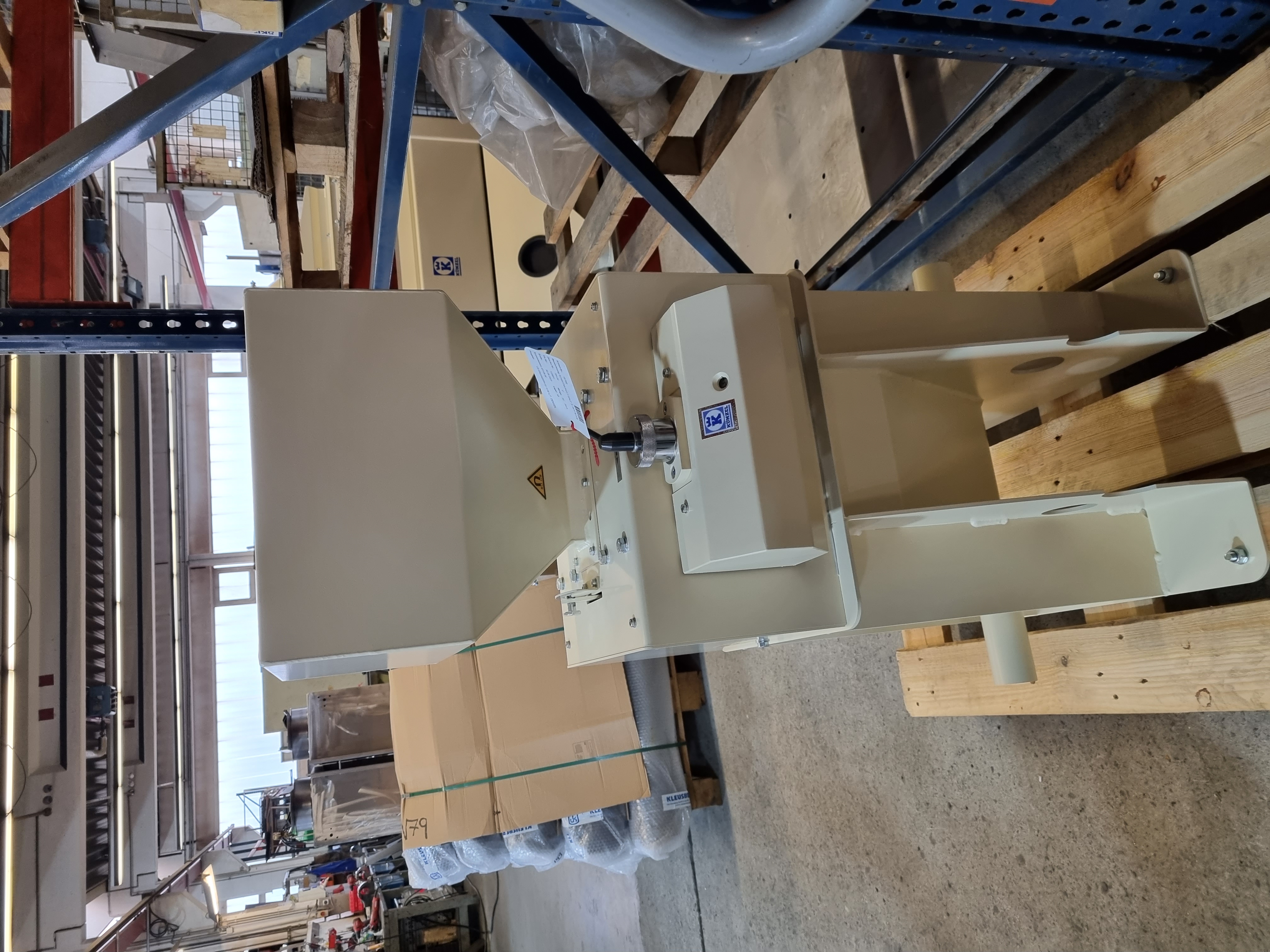
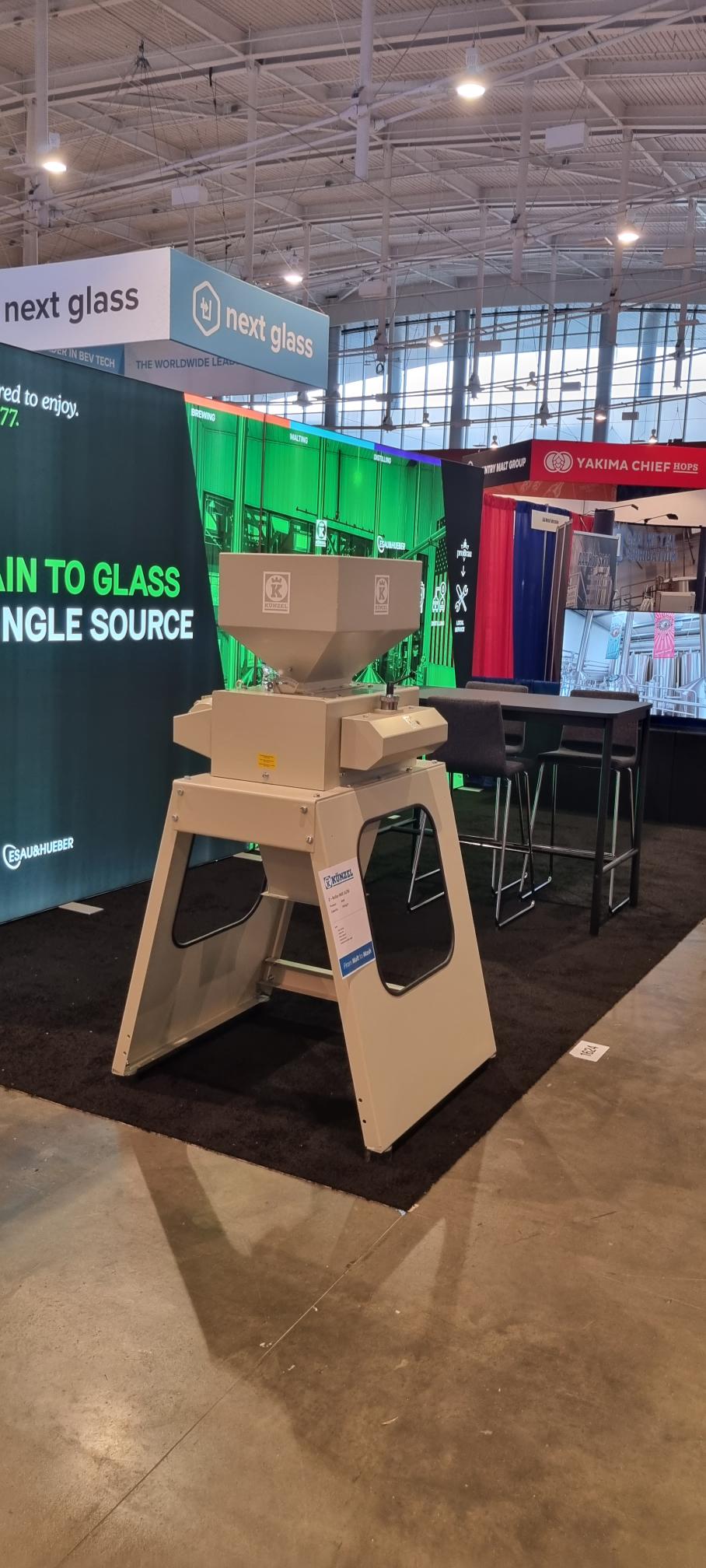
A two-roller grist mill crushes brewing malt and grain in pub breweries, craft breweries and pilot plants. The Künzel type 16, for example, is built from rigid steel sheet, the rollers run in heavy-duty roller bearings, and the milling gap is set by parallel adjustment with an easy-to-read scale indicator. A three-phase standard motor drives the mill via a V-belt.

Key facts

  • Optimal grist composition as the basis for the enzymatic digestion in the mash
  • A brewery-specific mill can reduce malt consumption by as much as 10%
  • Very robust construction and long service life
  • High operational reliability and low maintenance costs
  • Material infeed regulated by a steplessly adjustable rotary slide valve

Künzel models and capacities

Type 16/16

  • Capacity: up to 250 kg/h (550 lb/h)
  • Roll diameter: 160 mm
  • Roll length: 160 mm
  • Electrical connection: approx. 1.5 kW
  • Weight: approx. 185 kg

Type 16/30

  • Capacity: up to 500 kg/h (1,100 lb/h)
  • Roll diameter: 160 mm
  • Roll length: 300 mm
  • Electrical connection: 3 kW
  • Weight: approx. 245 kg

Dimensions with stationary machine rack (L x W x H): 940 x 860 x 1,650 mm.

Design and equipment

  • Edged and welded steel sheet construction with grating for coarse impurities and connecting flange for direct installation on the mill
  • Product: coarse grist of brewing malt without impurities
  • Parallel roller adjustment and maintenance-free reduction gear
  • Three-phase standard motor and V-belt drive with protective device, protective motor switch, 5 m of cable and CEE plug 16 A
  • Final coat of paint according to RAL 1015

Options

Pneumatic malt infeed for continuous or discontinuous operation, consisting of an infeed hopper for malt from sacks, a conveyor line, a blower filter combination and a manual or motor-operated locking system.

data sheet

send inquiry

Two, four or six rollers: which grist mill fits your brewery?

  • Two-roller mills (250 to 500 kg/h): one pair of rollers crushes the malt in a single pass, the robust choice for brewpubs, craft breweries and pilot plants.
  • Four-roller mills (400 to 3,000 kg/h): two passes, with intermediate screening between the roller pairs depending on the model, for an optimal grist composition and better lautering.
  • Six-roller mills (1,000 to 14,000 kg/h): screening between each pair of rollers for particularly precise fractions; the husks can be separated and mashed in separately.

proBrau is not tied to one manufacturer: we source grist mills from Künzel, Engl, Bühler and Täuber and recommend the mill that fits your brewhouse and your capacity.

For a complete grist preparation, combine the mill with grain and malt handling such as malt intake, cleaning, weighing and malt conditioning screws. Malt houses, farmers and distilleries producing their own malt will find the Kaspar Schulz drum malting system here as well.

What good milling has to achieve

Milling crushes the malt and prepares it for mashing, the first step of the brewing process. The most important requirements are:

  • crushing of the grain to the desired particle sizes
  • a constantly low proportion of flour
  • maximum protection of the husk structure
  • the possibility of husk separation
  • adaptation to varying malt qualities

Request a quote for your grist mill